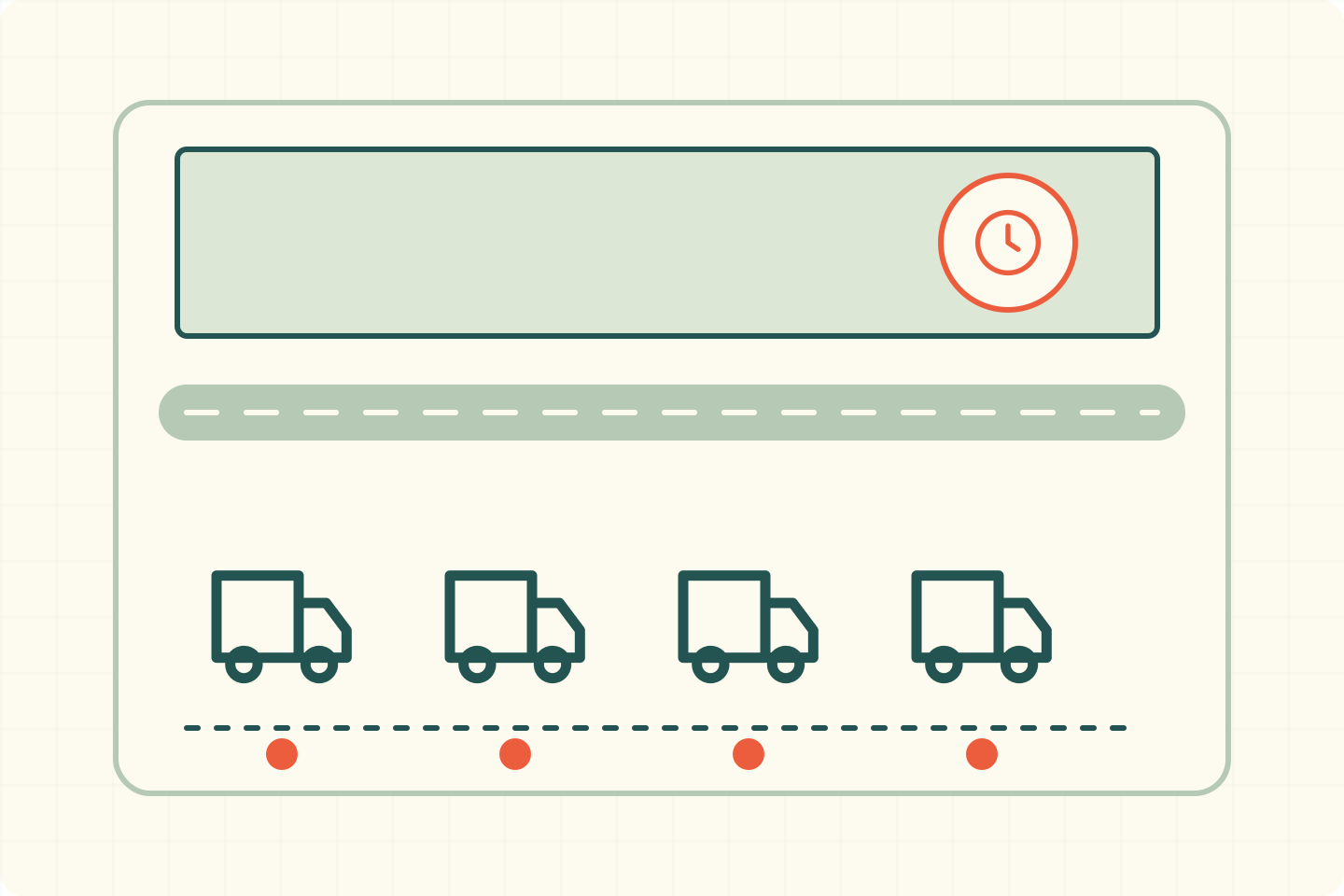
Work backwards from the next dispatch. Record vehicle energy needs, return times, parking windows and simultaneous charging demand. Assess power capacity, bay layout, cable management and operational support against that schedule. This gives fleet and logistics teams a practical basis for discussing equipment and phased depot infrastructure.
Start with the challenge at your site.
The total number of vehicles does not tell you how many must charge at once. A depot can have long overnight windows and a short, demanding midday turnaround.
WHAT TO THINK THROUGH
A more useful project brief.
These considerations help shape a site discussion; technical suitability needs assessment.
01
Work backwards from vehicle readiness
Record routes, return times, charging capability and the next required departure for each vehicle group. Separate overnight recovery from short turnaround needs. Discuss the charging schedule against real operations rather than assuming that every vehicle requires its own permanently assigned charger.
02
Review overlapping demand and available power
Identify periods when several vehicles need energy together, alongside the depot's other electrical loads. Consider whether operating schedules offer flexibility. Equipment choice, supply capacity and any proposed demand-management arrangement should be assessed together before the fleet commits to a rollout plan.
03
Keep charging part of the depot routine
Place charging within the normal flow of dispatch, loading and vehicle servicing. Clarify who connects vehicles, checks readiness and reports faults. Discuss maintenance access, possible interruptions and future fleet growth so the infrastructure conversation supports the people responsible for keeping vehicles moving.
HOW VASUDHA CAN HELP
Connect the need to the infrastructure.
Discuss site planning, charger installation, supporting electrical works and maintenance needs. Equipment, commissioning responsibilities and service availability are confirmed against your location and scope.
Share fleet models, duty rosters, daily distances, depot layout and supply information. A realistic schedule is more useful than an assumed charger count.
Start with the vehicles that will use the site, how long they normally park and how much charging they need before the next journey. Then review compatibility, the number charging together and the available electrical capacity. AC and DC can suit different patterns; a larger advertised rating is not automatically better. Share the location, vehicle use and parking arrangement so the discussion can begin with the site.
What affects the installation cost?
The cost includes more than the charger. Equipment type and quantity, supply upgrades, cable distance, distribution and protection, mounting or foundations, site preparation and service arrangements affect the scope. Ask for a quotation identifying inclusions, exclusions and work expected from other parties. A location, parking plan and intended use provide the starting point for a meaningful discussion.
Which locations does Vasudha cover?
Vasudha is based in Mumbai, Maharashtra. Share the project location, expected scope and access requirements so availability and execution needs can be discussed. For multiple locations, a site list and proposed sequence create a useful conversation. Coverage is confirmed for the actual project.
PUT THE REQUIREMENT IN CONTEXT
The charging window belongs in the operating plan.
Two fleets with the same vehicle count can need different infrastructure. One may return overnight with a long window before dispatch; another may have short overlaps between shifts. Mapping routes, arrival times and next departures gives the charging discussion a real operational starting point. Equipment and supply can then be assessed against those needs.
Questions worth answering early
Which vehicle models are involved and what charging methods do they support?
When does each group return and when must it be ready again?
How many vehicles need energy during the busiest overlapping window?
How will drivers and supervisors manage charging and report faults?
Provide a representative duty roster, vehicle list, depot layout and available electrical information. Include planned growth as a separate scenario so current and future requirements can be discussed clearly.
FROM POSSIBILITY TO POWER
Your next EV charging project starts with a conversation.
One site or multiple locations. An early idea or a defined requirement. Tell us what you’re planning.
We use essential cookies to keep the website working. Choose “Allow all” to also enable optional analytics cookies, or “Essential only” to continue without them. You can change your choice anytime using “Analytics preferences” in the footer.